
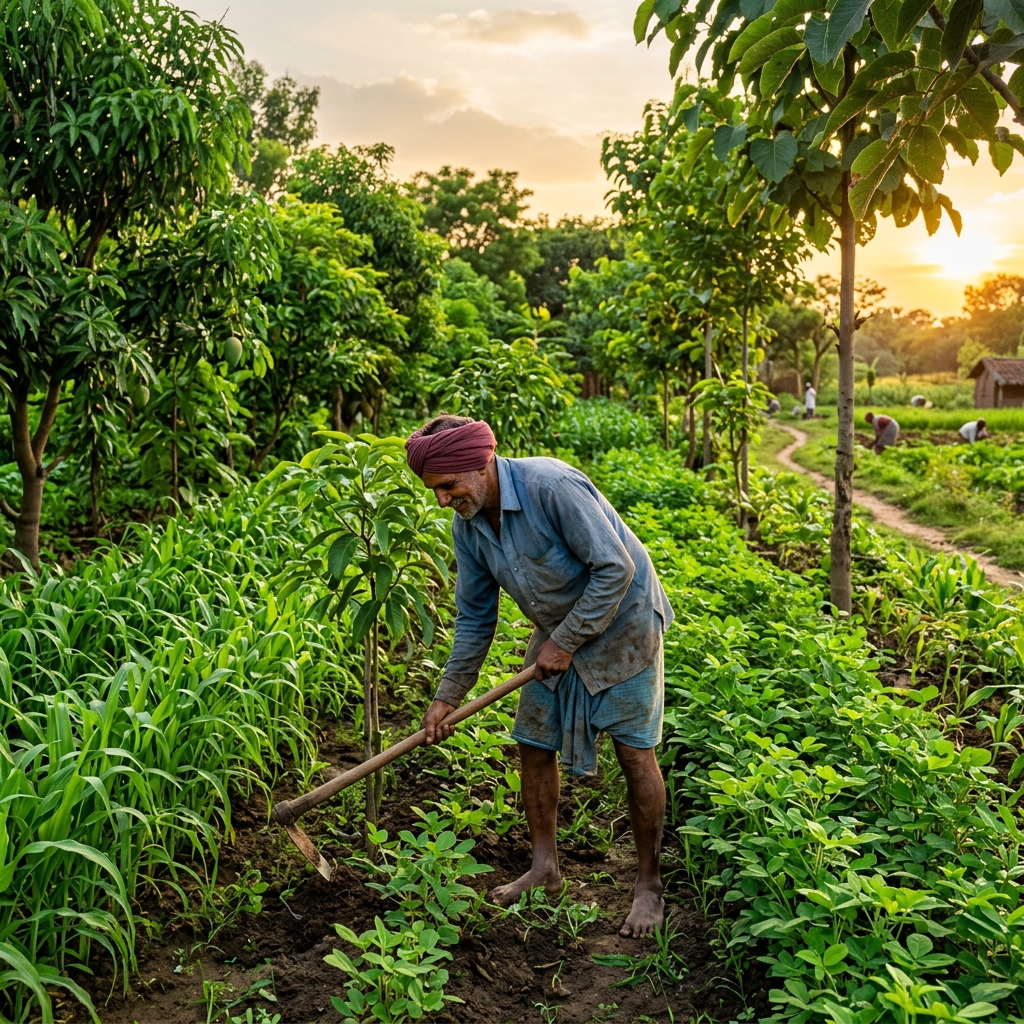
Agroforestry Development
Integrating trees and agriculture for sustainable, productive, and resilient landscapes.
Contents
Why Agroforestry Matters
Agroforestry is a sustainable land-use approach that integrates trees, crops, and sometimes livestock on the same piece of land. By combining agriculture and forestry, agroforestry systems create productive landscapes that deliver environmental, economic, and social benefits. Unlike conventional farming methods that often focus on a single crop, agroforestry promotes diversity, resilience, and long-term sustainability.
As farmers face increasing challenges from climate change, soil degradation, water scarcity, and fluctuating incomes, agroforestry offers a practical solution that improves farm productivity while restoring natural ecosystems.
Climate Change Mitigation
Agroforestry systems capture and store carbon while helping farms adapt to changing climate conditions.
Trees play a critical role in reducing the impacts of climate change by absorbing carbon dioxide from the atmosphere and storing it in their biomass and surrounding soil. Agroforestry systems act as effective carbon sinks while simultaneously enhancing climate resilience on farms. Trees provide shade, reduce temperature extremes, protect crops from strong winds, and improve the ability of agricultural landscapes to withstand droughts and changing weather patterns. By integrating trees into farming systems, agroforestry contributes to both climate mitigation and adaptation.
Soil Restoration
Tree roots improve soil structure, increase organic matter, and reduce degradation.
Healthy soil is essential for sustainable agricultural production. Agroforestry helps restore soil health through deep-rooted trees that stabilize the land, reduce erosion, and improve soil structure. Fallen leaves and organic matter decompose naturally, enriching the soil with nutrients and supporting beneficial microorganisms. Over time, agroforestry systems increase soil fertility, improve nutrient cycling, and reverse the effects of land degradation, creating more productive and resilient farming landscapes.
Water Conservation
Trees help retain moisture, reduce runoff, and support groundwater recharge.
Water scarcity is a growing challenge for agriculture in many regions. Agroforestry improves water management by increasing water infiltration and reducing surface runoff. Tree roots help rainwater penetrate deeper into the soil, replenishing groundwater reserves and improving moisture availability for crops. Shade from trees also reduces evaporation, helping conserve water during dry periods. These benefits contribute to greater water efficiency and long-term sustainability in agricultural systems.
Biodiversity Enhancement
Agroforestry creates habitats for birds, pollinators, and beneficial insects.
The integration of trees and diverse plant species creates a more balanced and ecologically rich environment compared to monoculture farming. Agroforestry systems provide food, shelter, and nesting habitats for birds, pollinators, and beneficial insects that support natural pest control and crop pollination. Increased biodiversity strengthens ecosystem resilience, reduces dependence on chemical inputs, and promotes healthier agricultural landscapes that work in harmony with nature.
Sustainable Income
Farmers gain multiple sources of revenue from crops, fruits, timber, fodder, and non-timber forest products.
One of the greatest advantages of agroforestry is income diversification. Instead of relying on a single crop, farmers can generate revenue from multiple products, including fruits, nuts, timber, medicinal plants, fodder, fuelwood, and other non-timber forest products. This diversified production system reduces financial risks, improves economic stability, and creates long-term income opportunities. Agroforestry also enhances farm productivity while providing valuable resources that can support household needs and local markets.
Building Resilient Farms for the Future
Agroforestry demonstrates that productive agriculture and environmental conservation can go hand in hand. By integrating trees into farming systems, farmers can improve soil health, conserve water, capture carbon, support biodiversity, and strengthen their livelihoods. These multifunctional landscapes create lasting benefits for both people and the environment.
At GEO Tree, we promote agroforestry as a sustainable solution for restoring ecosystems, enhancing farm resilience, and supporting rural communities. Together, we can build greener farms, healthier landscapes, and a more sustainable future for generations to come.
Ready to Make a Green Impact?
Whether you want to plant a tree in someone's name, support community-led CSR restoration programs, or calculate and offset your personal carbon footprint, GeoTree makes it simple and transparent.