
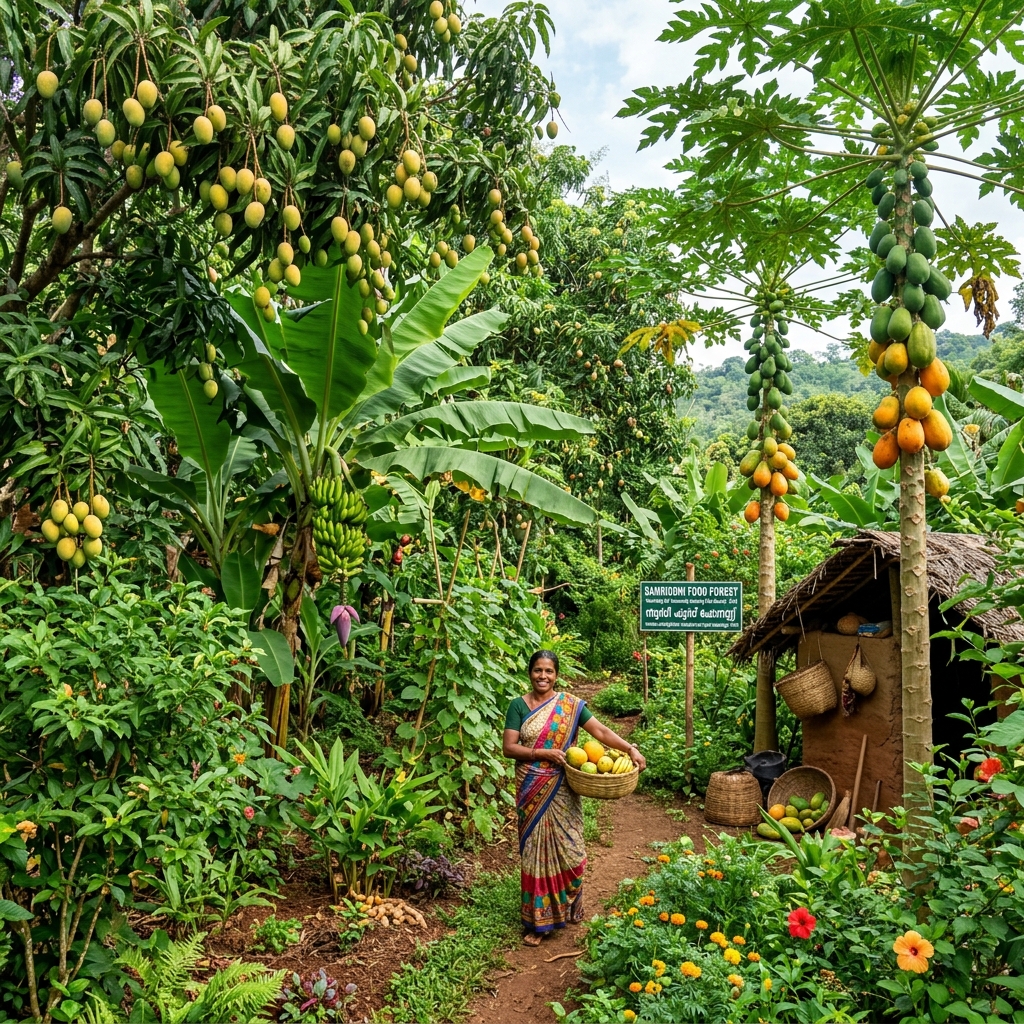
Food Forest Development
Sustainable, nature-inspired ecosystems designed to produce food while restoring the environment.
Contents
Why Food Forests Matter
Food forests are sustainable, nature-inspired ecosystems designed to produce food while restoring the environment. By combining fruit trees, nut trees, shrubs, herbs, vegetables, and other edible plants in a layered forest-like system, food forests create productive landscapes that benefit both people and nature. Unlike conventional agriculture, food forests work with natural ecological processes to improve biodiversity, build healthy soils, conserve water, and strengthen local food systems.
As communities seek sustainable solutions to food security, climate resilience, and environmental restoration, food forests offer a powerful model for creating long-term ecological and social impact.
Enhance Food Security
Provide communities with access to fresh fruits, nuts, and edible plants throughout the year.
Food forests create diverse and resilient food-producing ecosystems that supply a variety of nutritious fruits, nuts, herbs, and edible plants. By growing multiple species together, these systems provide a continuous source of food across different seasons while reducing dependence on single-crop farming. Community food forests can improve access to fresh, locally grown produce, support nutritional security, and strengthen local food systems for future generations.
Support Biodiversity
Create habitats for birds, pollinators, and beneficial insects while promoting ecological balance.
Food forests mimic natural forest ecosystems by incorporating a wide variety of plant species that support wildlife and pollinators. Birds, bees, butterflies, and beneficial insects find food, shelter, and breeding habitats within these diverse landscapes. Increased biodiversity improves pollination, natural pest control, and ecosystem resilience while creating healthier and more balanced environments. By supporting a rich variety of life, food forests contribute to stronger and more sustainable ecosystems.
Improve Soil Health
Increase organic matter, prevent erosion, and naturally enrich soil fertility.
Healthy soil is the foundation of productive ecosystems. Food forests continuously improve soil quality through leaf litter, decomposing organic matter, and deep-rooted perennial plants. Tree roots stabilize the soil and reduce erosion, while organic materials enrich the ground with nutrients and beneficial microorganisms. Over time, food forests build fertile, living soils that require fewer external inputs and support long-term productivity.
Conserve Water
Food forests improve water retention and reduce the need for intensive irrigation.
The layered vegetation and organic ground cover found in food forests help retain moisture, reduce evaporation, and improve water infiltration. Tree roots create channels that allow rainwater to penetrate deeper into the soil, replenishing groundwater and increasing water availability for plants. These natural water-conserving characteristics reduce the need for frequent irrigation, making food forests particularly valuable in regions facing water scarcity and changing climate conditions.
Combat Climate Change
Trees and perennial plants capture carbon while building climate-resilient ecosystems.
Food forests contribute to climate action by absorbing carbon dioxide from the atmosphere and storing it in vegetation and soil. Trees, shrubs, and perennial plants act as long-term carbon sinks, helping reduce greenhouse gas concentrations while improving environmental resilience. In addition to carbon sequestration, food forests create cooler microclimates, improve ecosystem stability, and enhance the ability of landscapes to withstand extreme weather conditions associated with climate change.
Strengthen Local Livelihoods
Generate sustainable income opportunities through the production of fruits, nuts, and other forest products.
Food forests provide long-term economic benefits for farmers, communities, and local organizations. The production of fruits, nuts, medicinal plants, herbs, seeds, and other forest products can create sustainable income streams while reducing reliance on costly agricultural inputs. Community-based food forest projects also generate employment opportunities in planting, maintenance, harvesting, and value-added product development, supporting inclusive and sustainable rural development.
Growing Food, Restoring Nature
Food forests demonstrate that food production and environmental conservation can work hand in hand. By creating productive ecosystems that provide food, restore biodiversity, improve soil health, conserve water, and capture carbon, food forests offer a sustainable solution for both people and the planet.
At GEO Tree, we promote food forest development as a powerful way to strengthen food security, support communities, and build resilient ecosystems. Together, we can create landscapes that nourish people while restoring the natural world for generations to come.
Ready to Make a Green Impact?
Whether you want to plant a tree in someone's name, support community-led CSR restoration programs, or calculate and offset your personal carbon footprint, GeoTree makes it simple and transparent.