
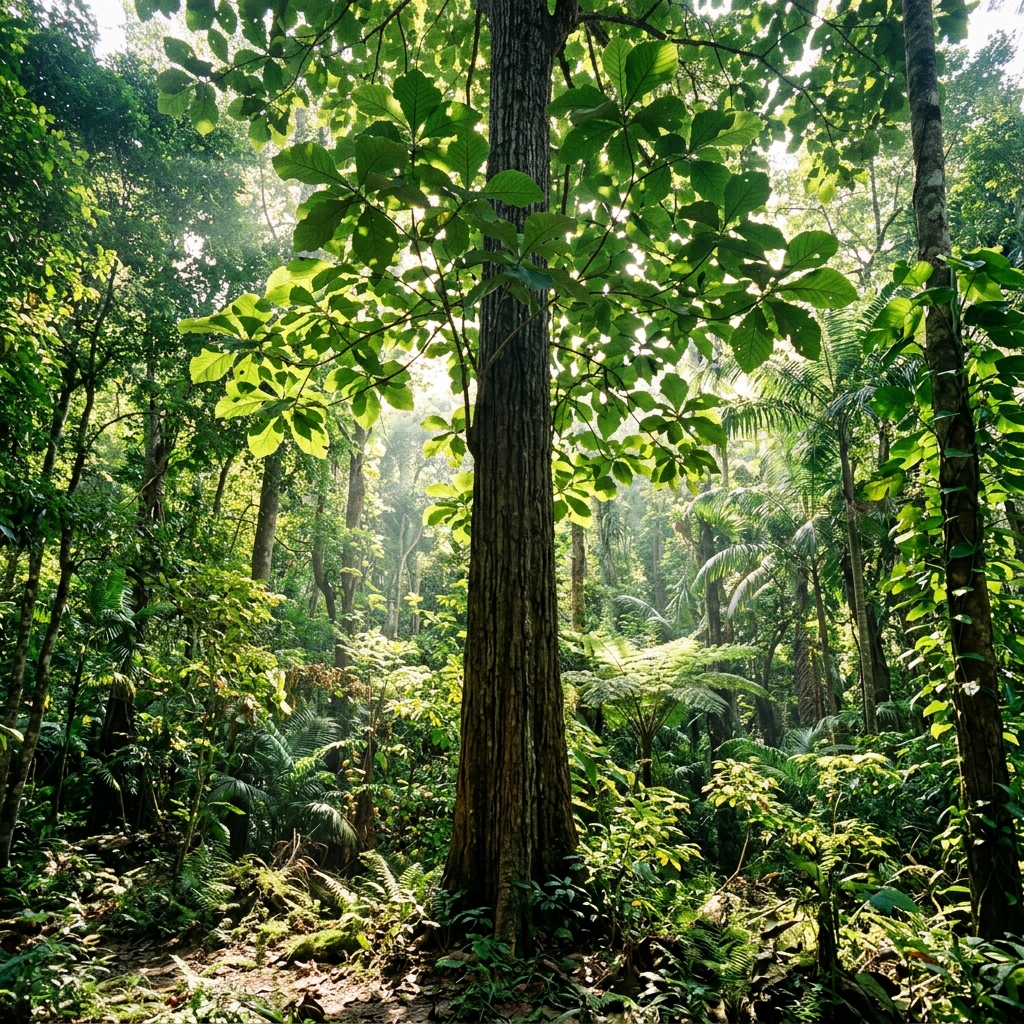
Teak, (Tectona grandis), a large deciduous tree belonging to the mint family (Lamiaceae), natively found in the mixed hardwood forests of South and Southeast Asia. It is world-renowned for its exceptionally durable, water-resistant timber, making it one of the most valuable forestry species globally.
Physical Description
The Teak tree grows impressively tall, often reaching heights of 30 to 40 meters (100 to 130 feet). Its trunk is typically straight with a rough, grayish-brown bark. During the wet season, the canopy bursts with enormous, ovate leaves that can measure up to 45 cm (18 inches) in length. It produces large panicles of small, fragrant white flowers that eventually develop into drupe fruits.
Environmental Impact
Carbon Sequestration and Soil Health
Due to its sheer size and the density of its wood, Teak acts as an excellent long-term carbon sink. Plantations of teak can sequester substantial amounts of carbon dioxide over a 40 to 60-year rotation cycle. Additionally, the massive annual shedding of its leaves provides significant organic matter, returning critical nutrients to the topsoil and maintaining soil fertility.
Sustainable Forestry and Economics
When grown in sustainably managed plantations or agroforestry systems, Teak reduces the pressure on primary natural forests. It provides immense economic stability for local communities and nations while simultaneously offering ecological cover for recovering landscapes.
Significance & Uses
Teak wood is famous for its natural oils and tightly grained structure, giving it incredible resistance to rot, termites, and harsh weather conditions. It has been used for centuries in shipbuilding, high-end furniture manufacturing, and exterior construction. Historically, the leaves have also been used as natural wrappers and plates, and various parts of the tree have applications in traditional medicine for treating skin ailments.
Quick Facts
- Scientific Name
- Tectona grandis
- Family
- Lamiaceae (Mint family)
- Native Region
- South and Southeast Asia
- Primary Uses
- High-grade timber, shipbuilding, furniture
- Key Trait
- Natural water and termite resistance